Post Line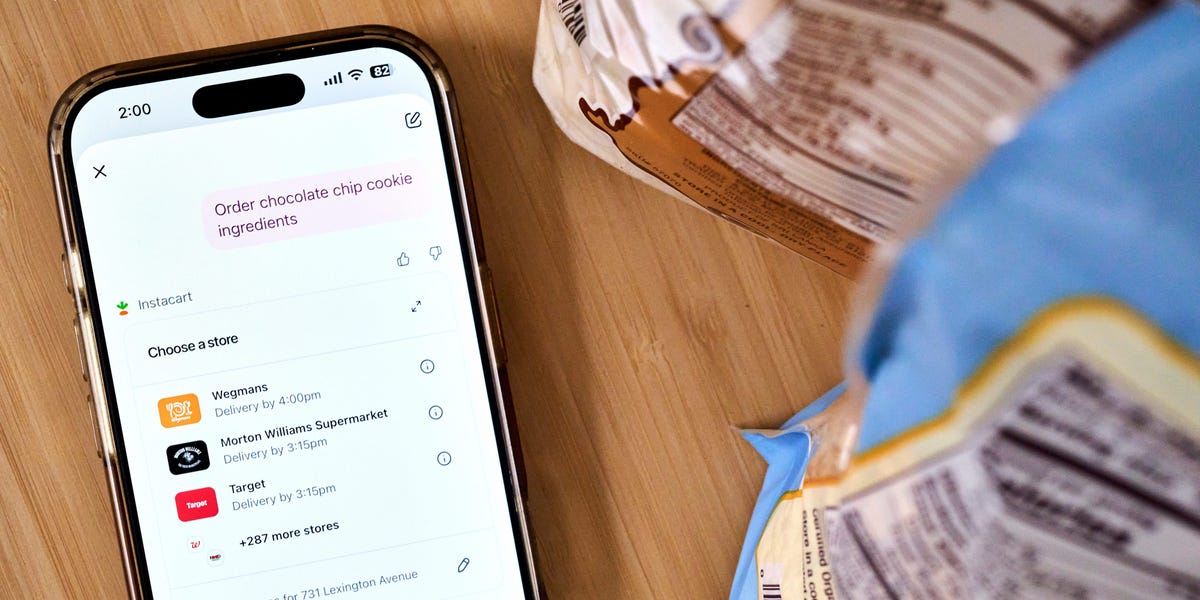
Instinct users flagged unsolicited shopping recommendations, raising questions about how personal AI agents will monetize their platforms. Gabby Jones/Bloomberg via Getty Images If Instinct has suddenly texted you a shopping list you never asked for, you're not alone. Three early users, among dozens of X users, told Business Insider that the personal AI agent sent them unsolicited product recommendations based on details from earlier conversations.
Shruti Gandhi, a general partner and founding engineer at AI-focused venture firm Array Ventures, said Instinct sent her a shopping list despite not requesting one. "I didn't ask for anything," Gandhi told Business Insider, adding that the agent knew she had a trip coming up. Screenshots Gandhi shared on X show Instinct using details about her upcoming conference and keynote to create a five-item list, including a $250.75 carry-on suitcase, sunscreen, and a power bank.
The recommendations — reviewed by Business Insider — come as Instinct expanded its shopping tools through a Shopify partnership and began rolling out Instinct Selections , a feature that Shinn says draws on recommendations curated by chefs, designers, architects, and local guides. They were not labeled as ads, and Business Insider could not determine whether Instinct earns money from resulting purchases . But they could test a red line set by Instinct CEO Noah Shinn.
In an interview on "Invest Like The Best" posted last week, Shinn said agents should not use their knowledge of users to steer them into purchases they do not want. He criticized platforms that use paid ads to persuade people to buy products they "may or may not want." "I think it would be a very dangerous world if Instinct were influencing the user's behavior to purchase something that they don't want to purchase or to subscribe to something that they don't want," he said. Instinct didn't respond to a request for comment.
When a recommendation feels like a pitch Ghandi isn't the only Instinct user to have flagged such unsolicited recommendations. Tanmaye Bhatia, AI lead at Primary Venture Partners, said Instinct texted him unsolicited product recommendations on Tuesday. A screenshot he published on X last Tuesday shows the agent offering picks "for the range and the road," including $15 golf alignment sticks, after drawing on earlier discussions about his golf swing and upcoming travel.
Bhatia told Business Insider he did not believe the recommendations were ads, but said they were "a bit of a turnoff." He said Instinct should have first asked whether it could make occasional recommendations based on his personal history . Girum Tihtina, the cofounder and CEO of medical-tourism marketplace Doctours, posted a screenshot on X last Wednesday showing Instinct recommending a "first office kit," including a monitor he said was worth roughly $200. Tihtina told Business Insider that the message arrived randomly, when he had not been discussing shopping, and that he could not connect the recommendation to any previous conversation.
"I have no idea why it chose what to show me," Tihtina said. "I just shrugged it off as they're probably experimenting on how to make money." The price of a personal agent So, is this Instinct's attempt to monetize its personal AI agent? On "Invest Like The Best" last Monday, Shinn described a business model in which Instinct stays free for users while merchants pay it a cut when it brings them a customer and helps complete a purchase.
That does not establish that Instinct earned money from the unsolicited recommendations. But marketing analysts told Business Insider the shopping suggestions highlight a potential conflict: An agent is supposed to advise its user, but may also have a financial incentive to turn that user's personal information into a purchase. Davood Wadi, an AI research scientist at General Motors and a research affiliate at McGill University's Desautels Faculty of Management, said the key unanswered question is whether Instinct makes money when a user buys something it suggests.
If it does, "then yes, this is monetization, even without any ads," he said. Kirk Plangger, chair and head of marketing at King's Business School, urged caution. There is "no evidence that these particular recommendations were paid placements or that Instinct made money from them," he said.
Still, he said, the bigger shift is that an agent can use what it knows about a user to "initiat[e] the shopping occasion itself." Even if products are selected in the consumer's interest, Instinct could have an incentive to create more opportunities to shop if it benefits whenever a purchase is made, Plangger said. Carlos Diaz Ruiz, an associate professor of marketing at Hanken School of Economics, said the messages do not prove covert advertising. But they create a "structural tension" if future commissions give Instinct an incentive to turn personal conversations into purchase leads, he said.
Ari Paparo, founder and chairman of Marketecture Media, said his "best guess" was that Instinct was testing whether these recommendations generate consumer interest before potentially moving toward an affiliate model. David Rand, a Cornell professor of information science, marketing, and psychology, was more agnostic. The suggestions could be a genuine attempt to help, or a monetization play, he said.
"Without transparency" into the agent's instructions, "there's really no way of knowing," he said. Read next Thibault Spirlet You're currently following this author! Click to unsubscribe from email alerts.
Thibault is a tech reporter at Business Insider's London office. He covers the intersection of technology and work — focusing on AI’s impact on the workplace, job and cognitive skills, and how economic changes are affecting careers. Before moving to the trending team, Thibault covered international affairs, including the Russia-Ukraine war, tensions in the South China Sea, and Russia’s economy on the news desk.
He has previously worked at the Daily Express and held internships at Agence France-Presse, Politico Europe, and Factal.Il parle français. Habla español. Email Thibault at tspirlet@businessinsider.com, connect with him on LinkedIn @ ThibaultSpirlet , or follow him on X @ ThibaultSpirlet and BlueSky @ thibaultspirlet.bsky.social .
Expertise AI and the future of work Job and cognitive skills in the AI economy Workforce trends First-person, "as-told-to" stories AI Artificial Intelligence Shopping More
Source: Business Insider