Post Line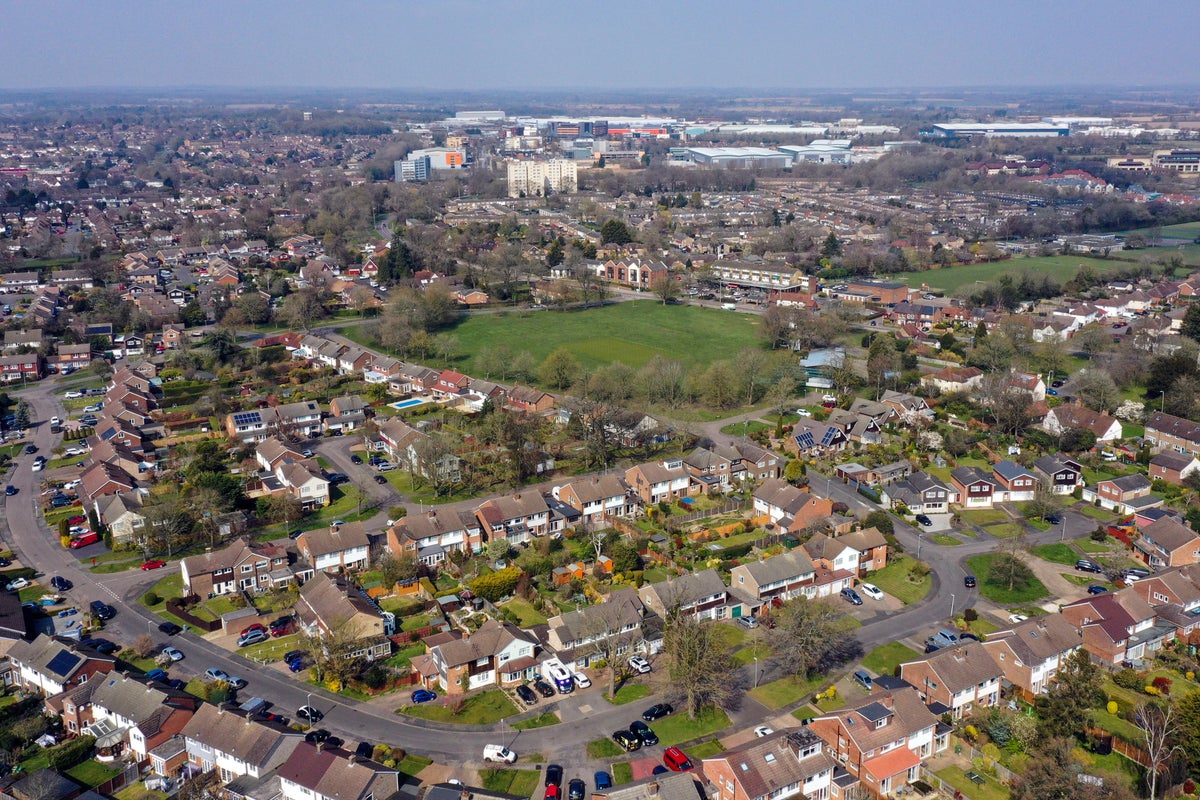
The average UK house price fell annually in August, marking the first year-on-year decrease since November 2023, according to an index. A 0.4% average annual drop in property values was recorded by Lloyds in August. The typical house price fell by 0.2% month on month, following a 0.1% month-on-month decrease in July.
Across the UK, the average house price in August was £298,468. Andrew Asaam, mortgages director at Lloyds, said: “The average property now costs £298,468, marking the first annual fall in house prices since November 2023. Despite that, prices are still marginally up (a 0.2% increase) since the start of the year.
The housing market has faced a more difficult backdrop in recent months, with the impact of global events on inflation and borrowing costs creating greater economic uncertainty. What we’re not seeing is a rush of homeowners cutting prices. But more are choosing to sit tight, with sellers reluctant to accept offers they feel are too low, while some buyers are waiting to see how conditions develop.” He added: “Average house prices remain around 25% higher than they were at the end of 2019, despite the substantial increase to interest rates seen over recent years.” Northern Ireland continued to record the strongest annual house price growth, Lloyds said, with prices up by 6.9% annually and the average property value standing at a record high of £231,245.
Scotland also recorded solid growth, with prices rising by 3.5% annually. In Wales, the average house price has increased by 0.6% annually while within England growth remained strongest in northern regions. Price growth remains under pressure across much of southern England, reflecting the greater affordability challenge caused by higher average prices.
Looking ahead, Mr Asaam said: “We expect the market to remain fairly subdued in the months ahead, but this will likely only have a limited impact on house prices. While affordability remains a challenge, wages continue to grow and employment has held up better than many anticipated. This will help to support demand from those who need or want to move.” Nicky Stevenson, managing director of Fine & Country, said: “In a market where buyers have more choice and are increasingly payment-conscious, an ambitious asking price can quickly become a barrier to securing a deal.
Sellers who price realistically from the outset are much more likely to capture the attention of the buyers who are ready to act.” Jason Tebb, president of OnTheMarket, said: “As we head into autumn, and another Budget beckons, political uncertainty and challenging economic conditions continue to form a backdrop to activity.” Ian Futcher, a financial planner at wealth manager Quilter, said: “Clearly, stretched affordability and an uncertain economic background has had a negative impact on house prices and, unfortunately, recent volatility in bond markets has the potential to put further pressure on mortgage rates. Swap rates have risen sharply in recent days and some lenders have already begun adjusting pricing in response. For first-time buyers who have spent months building a deposit and carefully calculating what they can afford, sudden shifts in mortgage rates can pull the rug from under their feet just as they are preparing to make a move.” Mark Harris, chief executive of mortgage broker SPF Private Clients, said: “Lenders are working hard to offer solutions to those trying to get on the ladder for the first time.” Here are average house prices followed by the annual change, according to Lloyds (regional annual change figures are based on the most recent three months of approved mortgage transaction data): East Midlands, £244,959, minus 0.2%; Eastern England, £331,410, minus 1.2%; London, £534,177, minus 1.5%; North East, £184,370, 2.7%; North West, £248,675, 2.0%; Northern Ireland, £231,245, 6.9%; Scotland, £223,437, 3.5%; South East, £381,729, minus 1.2%; South West, £298,807, minus 1.2%; Wales, £230,282, 0.6%; West Midlands, £260,286, 0.0%; Yorkshire and the Humber, £217,085, minus 0.3%.
Source: The Independent